
All About France With Kids: Important Information To Know

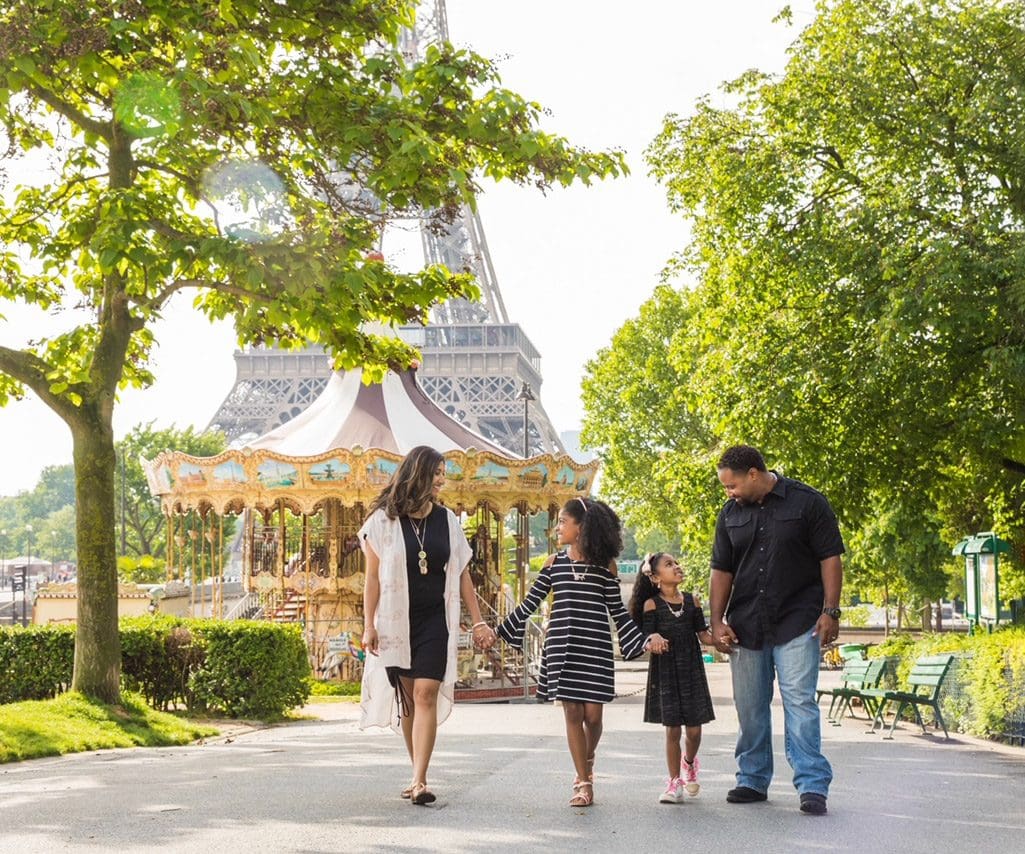
A family of four walks hand -in-hand with the iconic Paris carousel and Eiffel Tower in the distance.
Photo Courtesy: Sabeen Reza Burnette

Last Updated: May 2026

Author Note: Written by Gunjan Prakash, founder of Families Love Travel and a luxury family travel advisor with FLT Global Travel. Gunjan has traveled through France many times, including with her own children.

If you’re planning a trip to France with kids, there are a few important things to understand before you go. From currency and transportation to healthcare, language, and even babysitting services, having the right information upfront can make a big difference in how smoothly your trip goes.

The challenge is that this information is often scattered across different sources. That’s why we’ve put everything together in one place—so you can plan with confidence and avoid common mistakes.

In this guide, you’ll find essential tips for traveling in France with kids, along with practical advice you’ll actually use on the ground. And at the end, we’ve included ideas for things to do in France with kids, plus the best family-friendly hotels in France.

At a Glance

France With Kids: Quick Facts

Currency Euro (€)
Language French
Emergency Number 112
Best Time To Visit April to early June and September to October
Best For Museums, food, castles, beaches, countryside, skiing, theme parks, and family-friendly culture
Best Transportation High-speed trains between major cities; metro, taxis, private transfers, or rental cars depending on the region
Tip: If you are visiting during Easter, summer, Christmas, or French school holidays, book hotels, trains, major attractions, restaurant reservations, and private guides early.

At A Glance

At A Glance

Before you visit France with kids, you should learn the basics. Keep reading for local currency, visa information, time zone details, and more helpful information all about France with kids.

Local Currency & Time

Wondering about France’s local currency and how families can get the best exchange rates? The official currency in France is the euro (€). Credit and debit cards are widely accepted in many hotels, restaurants, shops, and attractions, especially in major cities and tourist areas. However, it is still a good idea to carry some euros for smaller cafés, markets, tips, taxis, public restrooms, or places that may have a minimum card charge.

For the best exchange rate, families should usually avoid airport currency exchange counters and choose to pay in euros, not U.S. dollars, when a card machine gives the option. ATMs in France often offer competitive exchange rates, but check your bank’s international withdrawal and foreign transaction fees before your trip. France’s official tourism site notes that ATMs are commonly available and often offer good exchange rates.

Official Language & Visa Information

French is the official language of France. English is spoken in many hotels, major attractions, and tourist areas, especially in Paris and larger cities. Still, it is helpful for families to learn a few basic French phrases before visiting, such as bonjourmercis’il vous plaît, and parlez-vous anglais?

If you’re planning an extended trip to France or traveling with a non-U.S. passport, make sure to check France’s visa requirements before your visit. U.S. passport holders can generally visit France and other Schengen Area countries for tourism for up to 90 days within a 180-day period without a traditional visa. However, families should also be aware that ETIAS, a new travel authorization for visa-exempt travelers, is expected to begin in late 2026. Once active, eligible travelers will need to apply before visiting France and other Schengen countries.

To learn more about France’s visa policy for families, click here.

Power/Standard Voltage

Families traveling from the United States will usually need a plug adapter for French outlets. Most modern phones, tablets, laptops, and camera chargers are dual voltage, but always check the small print on your device or charger before plugging it in. Hair dryers, curling irons, flat irons, and other heat-producing appliances are more likely to require a voltage converter unless they are clearly marked as dual voltage.

For families, I recommend packing more than one adapter, especially if everyone will be charging phones, tablets, cameras, watches, or portable battery packs at the same time.

In France, there are two associated plug types: type C and E. Plug type C is the plug that has two round pins and plug type E is the plug that has two round pins and a hole for the socket’s male earthing pin. France operates on a 230V supply voltage and 50Hz.

Local Weather

Knowing about the climate in France will be helpful before you depart, especially since weather can vary a lot depending on where your family is traveling. Overall, mainland France has a temperate climate, but the seasons and weather patterns are different from region to region. Western France, including Brittany, Normandy, and parts of the Loire Valley, tends to have an oceanic climate with more frequent rainfall. Central and eastern France, including Burgundy, Champagne, and Alsace, can have colder winters and warmer summers. Southeastern France, including Provence, the Côte d’Azur, and Corsica, has a Mediterranean climate with hot, dry summers and milder winters. Mountain regions, including the French Alps and Pyrenees, can see snow for several months of the year. 

For many families, the best time to visit France is spring or early fall, when the weather is generally pleasant and crowds are more manageable. Summer is popular, especially for the South of France and school vacations, but July and August can be hot, crowded, and expensive. If you are visiting Paris or the French Riviera during the summer, plan sightseeing earlier in the day, book air-conditioned hotels, and build in downtime for kids.

Winter can also be a wonderful time to visit France, especially for skiing in the French Alps, Christmas markets in Alsace, or a quieter city break in Paris. Families should pack based on the specific region and season, not just the country as a whole.

Please visit AccuWeather for the temperature in France during your holiday. If you need more help planning your France vacation with kids, feel free to check out France’s official tourism website for more information.

Health Information

Having the right health and safety information is important when visiting France with kids, especially if your child has allergies, takes prescription medication, or may need medical care while traveling.

France has a strong healthcare system, and pharmacies are easy to find in most cities, towns, and tourist areas. Pharmacists can often help with minor issues, over-the-counter medications, and basic advice. Still, families should pack a small first-aid kit, copies of prescriptions, and any essential children’s medications from home, including allergy medicine, fever reducers, stomach medicine, and motion sickness medication.

Children’s medications in Europe may taste different from what kids are used to in the United States. Some liquid medications may be less sweet or have different flavoring, which can be an issue for picky children. To avoid stress, pack the basics your child already knows and tolerates well, and keep prescription medications in their original packaging.

Vaccinations, Health Tips, & Hospitals

Visiting France with young ones? Remember to check if your child has all the correct shots and vaccines. For a complete list of the recommended vaccines and more health information on all about France with kids, including COVID-19 warnings and regulations, visit the official CDC website. It’s always better to be safe than sorry, so you should also check out hospitals near your vacation destination just in case.

Vaccinations, Health Tips, & Hospitals

Visiting France with kids? Before your trip, make sure your children are up to date on routine vaccinations and check the official CDC Travelers’ Health page for the most current vaccine and health recommendations for France.

It’s also smart to look up nearby hospitals, urgent care centers, and pharmacies close to your hotel or vacation rental before you travel, especially if your child has allergies, asthma, food sensitivities, or other medical needs. Families should also consider travel insurance with medical coverage, particularly for longer trips, ski vacations, or active itineraries.

Police, Fire Department, Ambulance

Police, Fire Department, Ambulance

For emergency services in France, dial 112, the European emergency number. You can also call 15 for medical emergencies or ambulance/SAMU, 17 for police, and 18 for the fire department.

Families should save these numbers before traveling, especially if visiting smaller towns, countryside regions, beaches, or ski areas.

Safety Issues

France is generally a safe and popular destination for families, especially in well-traveled areas like Paris, Provence, Normandy, the Loire Valley, the French Riviera, and the French Alps. Still, families should use normal big-city precautions, especially in crowded tourist areas, train stations, airports, metros, and around major attractions.

Petty theft and pickpocketing can happen, so keep bags zipped, avoid leaving phones or wallets on café tables, and stay alert on public transportation. It’s also smart to check for strikes, demonstrations, or transportation disruptions before and during your trip, as these can occasionally affect sightseeing or train schedules.

You can review the current U.S. Department of State France Travel Advisory here.

France For Kids
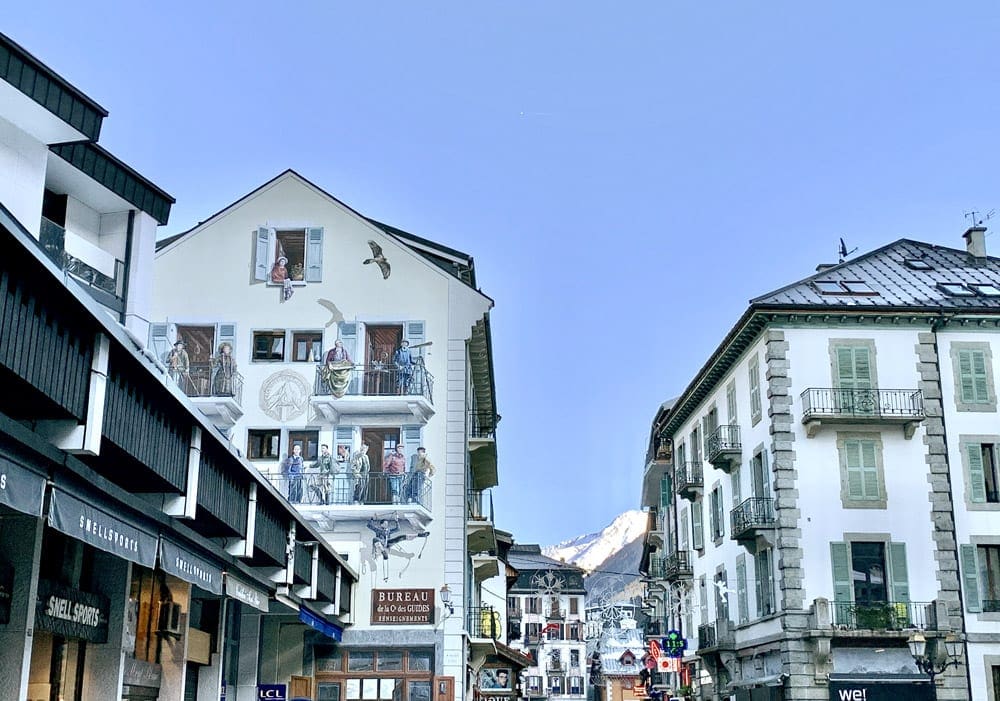
A view of downtown Charmonix.
Photo Courtesy: Gunjan Prakash

Visiting France with kids is very doable, but a little planning makes the trip much easier. Keep reading for helpful information on babysitting services, baby gear rentals, strollers, and other family travel logistics.

Babysitting Services & Baby Gear Rentals

If you’re hoping for an adults-only dinner or a quiet evening during your family trip to France, many larger cities and resort areas offer babysitting options. In Paris and other popular destinations, families can often find English-speaking babysitters through hotel concierges, established babysitting agencies, or vetted local providers. If you’re staying at a luxury hotel, ask the concierge in advance, as some hotels can arrange babysitting with notice.

Families traveling with babies or toddlers can also rent baby gear in many parts of France, including strollers, car seats, cribs, high chairs, baby baths, and other essentials. This can be especially helpful if you are taking trains, changing hotels, or trying to avoid overpacking. Availability varies by city and season, so reserve baby gear ahead of time, especially during school holidays and summer.

Transportation

Transportation is another thing to consider when vacationing in France with kids. Whether you need information about car seats or all about local airlines in France for families, you’ve come to the right place.

Car Seat Laws

If you plan to ride in a car during your France vacation with kids, keep French car seat rules in mind. Seat belts are mandatory in the front and back seats. In general, children under age 10 must sit in the rear of the vehicle and use an approved child restraint system suited to their size and weight. A child age 10 or older must wear a seat belt, whether sitting in the front or back. 

There are some exceptions. A child under 10 may sit in the front if using a rear-facing approved child restraint, but the passenger airbag must be deactivated. Other exceptions can apply if the vehicle has no rear seats, the rear seats do not have seat belts, the rear seats are unusable, or all rear seats are already occupied by other children under 10. 

For families, the practical advice is simple: reserve car seats in advance for rental cars, private transfers, or hotel-arranged transportation. Do not assume taxis or rideshare vehicles will automatically have child seats available. If your child still needs a specific seat, booster, or harness, confirm it before arrival or bring a travel-friendly option from home.

Transportation Services

Transportation is an important part of planning a France vacation with kids. Families may use trains, taxis, private transfers, rental cars, ferries, or short domestic flights depending on the itinerary. In general, trains are best for traveling between major cities, private transfers are easiest for airport arrivals and luggage-heavy days, and rental cars are useful for countryside regions.

Paris is mainly served by Charles de Gaulle Airport (CDG) and Orly Airport (ORY). Charles de Gaulle is the larger international airport and the most common arrival point for long-haul flights, while Orly serves many domestic, European, and some international routes. Paris-Beauvais is sometimes marketed as a Paris airport by low-cost airlines, but it is much farther from the city and usually less convenient for families. 

Train

France has an extensive rail network, operated primarily by SNCF, and trains are often one of the easiest ways for families to travel between major cities. High-speed trains connect Paris with many popular destinations, including Lyon, Avignon, Marseille, Nice, Bordeaux, Strasbourg, and other regions across the country.

If you are traveling from London, Eurostar is the most convenient train option, running from London St Pancras International to Paris Gare du Nord in a little over two hours. When connecting through Paris, check your arrival and departure stations carefully. Paris has several major train stations, including Gare du Nord, Gare de l’Est, Gare de Lyon, Gare d’Austerlitz, Gare Montparnasse, and Gare Saint-Lazare. Your connecting train may leave from a different station, so families should allow extra time to transfer across the city, especially with luggage, strollers, or young children. 

When booking trains, reserve seats early for popular routes and school-holiday periods. Families traveling with babies or young children should check SNCF’s child fare options, luggage rules, and family seating where available. Children under 4 may travel free on a parent’s lap on some SNCF trains, though families can also book a separate child seat for more comfort. 

Ferries

Ferries are useful for certain France itineraries, especially if your family is traveling between England and northern France or visiting Corsica. From the south of France, ferries to Corsica operate from ports such as Nice, Toulon, Marseille, and Sète, with arrivals in Corsican ports such as Ajaccio, Bastia, Porto-Vecchio, Propriano, and L’Île-Rousse. Routes and schedules vary by season, so families should check ferry times carefully before building them into an itinerary. 

Coaches & Buses

Coaches and long-distance buses can be a budget-friendly way to travel around France or between European cities, but they are usually not the most comfortable option for families with young kids, luggage, or limited vacation time. For most family trips, trains or private transfers are more practical. Local buses can still be useful in smaller towns, beach areas, ski resorts, and countryside regions where train access is limited.

I would remove the old Eurolines wording. It feels outdated and too directory-like.

Cars

A rental car can be helpful if your family is visiting Provence, Normandy, Dordogne, the Loire Valley, smaller villages, countryside hotels, or areas where train service is limited. In Paris and larger cities, however, renting a car is usually more stressful than helpful because of traffic, parking, and restricted driving zones.

To drive in France, travelers should carry a valid driver’s license, vehicle registration, and proof of insurance. Non-EU visitors may also need an International Driving Permit, depending on their license and rental company requirements, so families should check before traveling. If renting a car, reserve child car seats in advance and confirm the correct size for each child. Do not assume car seats will be available last minute.

Buy European train tickets, the safe and simple way by using Rail Europe.

Other Things to Know Before Visiting France With Kids
Searching for more tips about France with kids? From tipping customs to holidays and family travel logistics, there are a few more things families should know before visiting France.

Tipping Customs

Tipping in France is different from tipping in the United States. In restaurants and cafés, service is generally included in the menu price, often shown as “service compris.” This means a large tip is not expected.

For casual cafés, families can round up the bill or leave small change. At nicer restaurants, leaving around 5% to 10% for excellent service is appreciated but not required. For taxis, hotel porters, private guides, drivers, spa services, or babysitters, tipping is discretionary and depends on the level of service.

Important Holidays

Before visiting France with kids, check whether your trip overlaps with a public holiday or French school vacation. Some museums, shops, restaurants, and attractions may close or operate on reduced hours, and trains, hotels, and popular destinations can be busier or more expensive.

Major French public holidays include New Year’s Day, Easter Monday, Labor Day, Victory Day, Bastille Day, Assumption Day, All Saints’ Day, Armistice Day, Christmas Day, and several religious holidays that change dates each year. May 1, Labor Day, is especially important because many businesses and attractions close. France currently observes 11 national public holidays. 

Families should check France’s official public holiday calendar before booking flights, trains, restaurants, or major attractions.

Things to Do in France With Kids

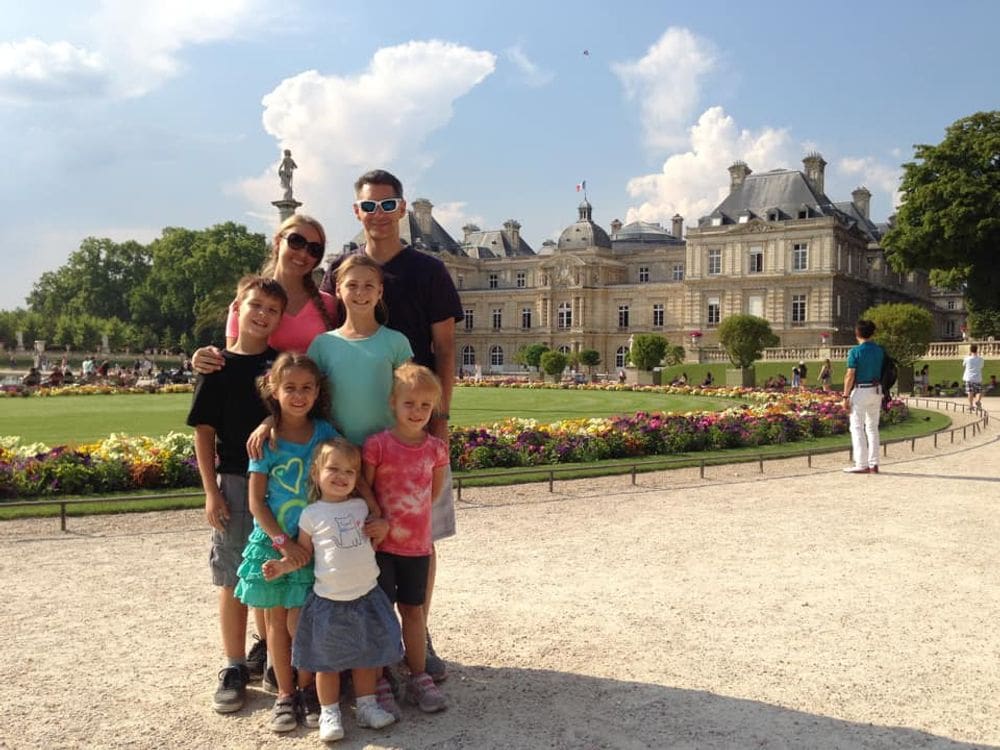
A family of six poses together with the Palace of Versailles behind them.
Photo Courtesy: Lexie Lantz

Once you’ve reviewed the important travel information for France, it’s time to think about what to do with kids. France offers a wonderful mix of culture, food, history, beaches, countryside, theme parks, and ski destinations, making it one of the most versatile countries in Europe for families. For a deeper look at itinerary ideas, check out our guide to the Best Places to Visit in France With Kids. If your family loves art, history, or interactive learning, you can also read our article on the Best Museums in France for Kids.

Explore Paris With Kids

Paris is often the first stop for families visiting France. Popular kid-friendly attractions include the Eiffel Tower, Louvre Museum, Luxembourg Gardens, Seine River cruises, Jardin des Tuileries, Musée d’Orsay, and Disneyland Paris. Families can also enjoy neighborhood walks, bakeries, parks, carousels, and casual cafés throughout the city.

Visit the Beaches and Coastal Towns

For beach time, families can explore the French Riviera, including coastal towns like Nice, Antibes, Cannes, Villefranche-sur-Mer, and Cassis. The South of France is especially popular in summer, but families should book hotels, beach clubs, restaurants, and private tours early during July and August.

Explore Castles, Villages, and French History

For beach time, families can explore the French Riviera, including coastal towns like Nice, Antibes, Cannes, Villefranche-sur-Mer, and Cassis. The South of France is especially popular in summer, but families should book hotels, beach clubs, restaurants, and private tours early during July and August. For more ideas, check out our guide to the Best Towns and Villages in the South of France With Kids.

Plan a Family Ski Trip to the French Alps

In winter, families can visit the French Alps, including ski destinations such as Courchevel, Méribel, Val d’Isère, Megève, and Chamonix. These areas offer skiing, ski schools, mountain restaurants, scenic gondolas, and winter activities for both skiers and non-skiers.

Experience Christmas Markets in France

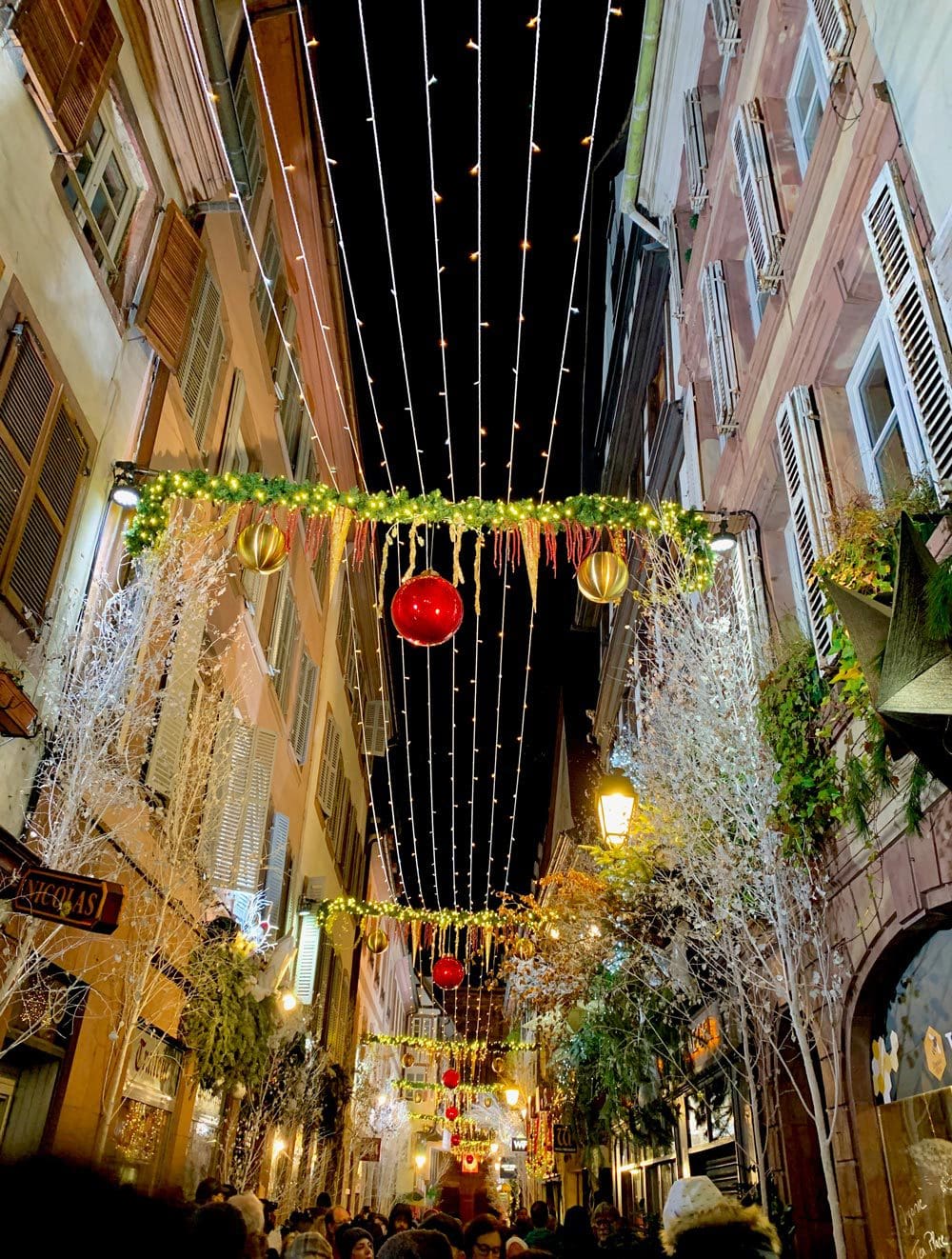
France is also a beautiful holiday destination. Families visiting in late November or December may enjoy Christmas markets in Strasbourg, Colmar, Paris, Reims, and other towns across Alsace and eastern France. For more ideas, check out our guide to the Best Christmas Markets in Europe For Families, including Strasbourg and Colmar.

Book Family-Friendly Tours and Activities

For tours and activities, platforms such as Viator and GetYourGuide can be useful for comparing family-friendly options in Paris and throughout France. However, always check the cancellation policy, meeting point, age requirements, and stroller accessibility before booking. For more customized experiences, families may prefer private guides, private transfers, or tours arranged directly through trusted local partners.

RELATED ARTICLE: Fantastic Things To Do In Paris With Young Kids!

Where to Stay in France With Kids

The upper, decorative roof life of the Hôtel Lutetia, one of the best Paris hotels for families.
Photo Courtesy: Hôtel Lutetia

Where to Stay in France With Kids

Looking for the best places to stay in France with kids? Once you’ve reviewed the basics, it’s time to decide where your family should base itself. The best place to stay depends on your itinerary, your children’s ages, your transportation plans, and whether you want city sightseeing, beaches, countryside, skiing, or a slower-paced vacation.

Staying in Paris With Kids

Paris is often the most popular place for families to stay in France because it offers attractions for all ages, including museums, parks, cafés, river cruises, shopping, and easy access to Disneyland Paris. Families should pay close attention to neighborhood and room configuration when booking. Many Paris hotel rooms are small, and family rooms can be limited. Unlike in the United States, rooms with two double or queen beds are not as common in Paris and other parts of France.

For families, connecting rooms, suites, apartment-style hotels, or luxury hotels with larger family-friendly accommodations are usually the best options. If you are planning a Paris trip, check out our guides to the Best Hotels in Paris for Families and Where To Stay In Paris with kids.

Hotels, Apartments, and Villas in France

In larger cities like Paris, Lyon, Bordeaux, Nice, and Strasbourg, hotels are usually the most convenient option for families who want service, concierge help, breakfast, housekeeping, and a central location. Luxury hotels may also offer suites, connecting rooms, or larger room categories that work better for families, though these should be booked early.

For beach areas, countryside regions, Provence, the Loire Valley, Normandy, ski destinations, or longer stays, families may prefer apartment-style hotels, villas, or carefully vetted vacation rentals for more space. Renting a home can be especially helpful for families who want multiple bedrooms, a kitchen, laundry, outdoor space, or a slower pace. In luxury destinations, private villas and high-end home rentals can also be a great option for multigenerational trips or families who want more privacy and space than a hotel can provide.

If you book a vacation rental, check the exact location, air conditioning, elevator access, number of bathrooms, cancellation policy, and whether the property is professionally managed. In France, especially in older buildings, amenities like elevators, air conditioning, large bathrooms, and laundry facilities are not always guaranteed.

Booking Tip for Families

Families can compare hotel options through major booking platforms or book directly with hotel brands. However, for more complex trips, luxury hotels, multi-city itineraries, villas, or rooms that need to fit a family comfortably, it may be worth working with a travel advisor who can help with room categories, hotel location, transfers, guides, and family-friendly logistics. Some luxury hotels may also include added benefits when booked through preferred partner programs, such as breakfast, hotel credits, upgrades when available, and early check-in or late check-out when possible.

Planning a France family vacation? Through FLT Global Travel, we help families choose the right region, hotel, room setup, guides, transfers, and itinerary pace for a seamless trip to France. For select luxury hotels, we may also be able to secure preferred partner benefits such as daily breakfast, hotel credits, room upgrades when available, and early check-in or late check-out when possible.

Find your vacation rental with VRBO here!

Frequently Asked Questions About Visiting France With Kids

Is France a good place to visit with kids?

Yes, France is a wonderful country to visit with kids because it offers such a wide variety of experiences. Families can explore museums and parks in Paris, beaches along the French Riviera, castles in the Loire Valley, villages and markets in Provence, ski resorts in the French Alps, and Christmas markets in Alsace.

What is the best time to visit France with kids?

The best time to visit France with kids is usually April to early June or September to October, when the weather is pleasant and crowds are more manageable. Summer is popular, especially for the French Riviera and Provence, but July and August can be busy, hot, and expensive. Winter is ideal for skiing in the French Alps or visiting Christmas markets.

How many days do you need in France with kids?

For a first family trip to France, plan around 7 to 14 days. With 7 days, families can focus on Paris plus one nearby region, such as the Loire Valley, Normandy, or Disneyland Paris. With 10 to 14 days, you can create a more balanced itinerary that includes Paris and another major region, such as Provence, the French Riviera, the French Alps, or the Loire Valley. Try not to cover too much in one trip, especially with younger kids.

Where should families stay in France with kids?

Paris is often the easiest first base for families, especially for museums, parks, sightseeing, and Disneyland Paris. For a beach vacation, consider the French Riviera. For castles and countryside, look at the Loire Valley. For skiing, consider the French Alps. For slower-paced village stays, Provence can be a great choice.

Is Paris kid-friendly?

Yes, Paris can be very kid-friendly if you plan the trip well. Families should choose a convenient neighborhood, stay near a metro stop or park, avoid overpacking the itinerary, and book larger rooms, suites, or connecting rooms early. Popular family-friendly stops include the Eiffel Tower, Luxembourg Gardens, the Louvre, Jardin des Tuileries, Seine River cruises, and Disneyland Paris.

Do families need a car in France?

Not always. Trains are often the easiest way to travel between major cities, and taxis, metros, buses, and private transfers work well in Paris and larger cities. A rental car can be helpful for Provence, Normandy, Dordogne, the Loire Valley, countryside hotels, villages, and some beach or ski itineraries.

Are hotel rooms in France good for families?

They can be, but families need to book carefully. Hotel rooms in France are often smaller than in the United States, and rooms with two double or queen beds are not as common. Families may need connecting rooms, suites, apartment-style hotels, villas, or carefully vetted vacation rentals for more space.

What should families know before visiting France with kids?

Families should plan around hotel room size, restaurant hours, train logistics, school holiday crowds, and attraction reservations. It is also helpful to bring essential children’s medications from home, reserve car seats in advance, and book popular museums, tours, trains, and restaurants early during busy travel periods.

Can I plan a France family trip myself?

es, you can plan a France family trip yourself, especially if you are only visiting Paris or following a simple train-based itinerary. However, France can become more complicated when you add multiple regions, countryside stays, beach towns, ski resorts, villas, private guides, restaurant reservations, car seats, or transfers.
For more complex trips, FLT Global Travel can help families choose the right regions, hotels, room setups, guides, transfers, and itinerary pace so the trip feels smoother and better planned.

Is France good for picky eaters?

Yes, France can work well for picky eaters, especially in major cities and family-friendly destinations. Children can usually find simple foods like bread, pasta, omelets, crêpes, roast chicken, fries, fruit, yogurt, pastries, and sandwiches. That said, menus may be more limited in small villages or formal restaurants, so families with picky eaters should plan ahead and keep snacks on hand.

What are the car seat requirements in France?

In France, children under age 10 generally must sit in the rear seat and use an approved child restraint suited to their size and weight. Seat belts are required in both the front and back seats. Families should reserve car seats in advance for rental cars and private transfers, since taxis and rideshares may not always have them available.

Is France stroller-friendly?

France is partly stroller-friendly, but it depends on the destination. Paris has parks, wide boulevards, and many family-friendly neighborhoods, but metro stations often have stairs, elevators are not always available, and older buildings may be tight. Villages, castles, cobblestone streets, beaches, and historic towns can also be tricky with a stroller. A lightweight, foldable stroller is usually the best option.

Happy Travels!

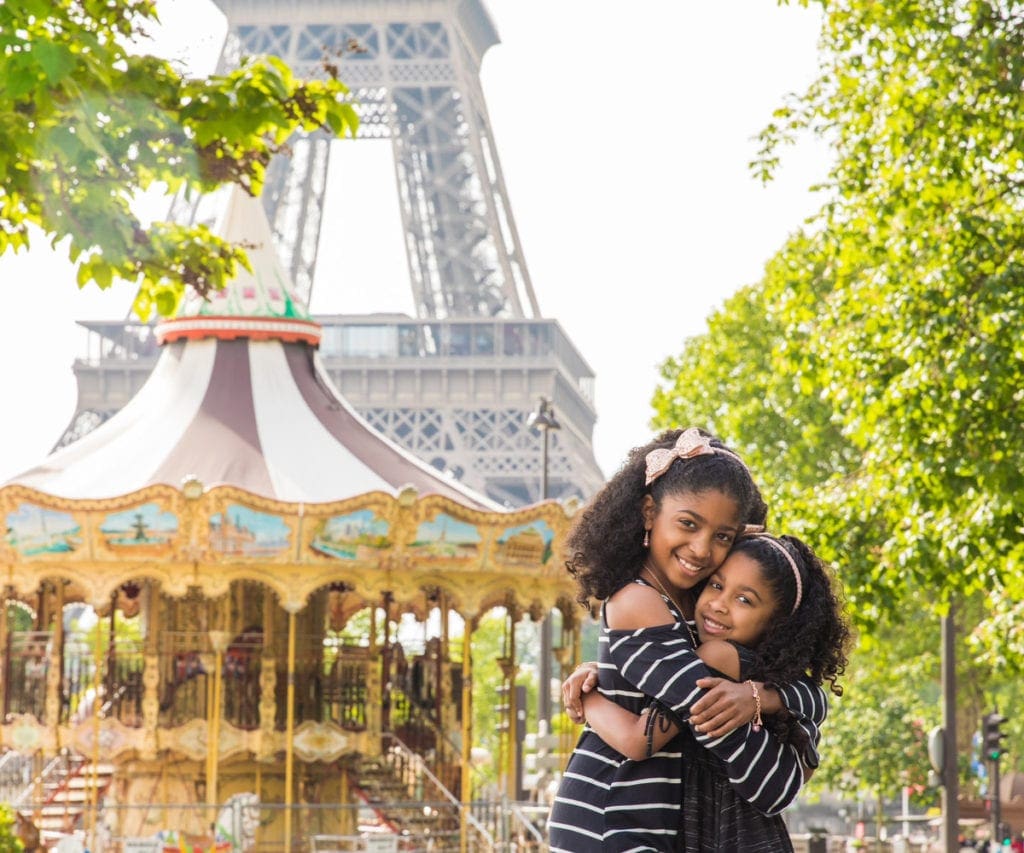
Two sisters of color embrace with Paris' iconic carousel and Eiffel tower behind them.
Photo Courtesy: Sabeen Burnette

We hope you found this guide to All About France With Kids: Important Information To Know helpful as you plan your family trip. From world-class museums and charming villages to beautiful beaches, ski resorts, castles, and countryside escapes, France offers so much variety for families. Enjoy your vacation to France with kids!

*This post may contain affiliate links that may earn us a small commission, at no additional cost to you. Affiliate links in no way inform the hotels, sights, products, or other recommendations included in our articles.

Families Love Travel is not liable for any injuries and/or damages to persons or property occurring as a result of your vacations influenced by the suggestions on this website. We are not responsible for any information on this website, such as recommendations for babysitting services, car rentals, or accommodations. All content provided is for informational and review purposes only. The information we provide is to make it easier for families to travel together and nothing more. Try the suggestions at your own risk. 

READ MORE:

Popular Reads
Tourists gathered while sightseeing in Lisbon on vacation
Our Lisbon Family Vacation

Families Love Travel contributor Dana Arnold shares details of her recent Lisbon family vacation, including her favorite activities and restaurants.

Portugal landscape
Three Weeks in Portugal With Kids

You’ve heard it before and the rumors are true - Portugal with kids is the go-to destination for a wonderful Read more

A dad and his young son look out the window of a chateau in France.
10 Best Museums in France with Kids

Any family considering taking kids on a trip to France knows that museums are inevitably part of the experience. France Read more

A mom and her young daughter swim in crystal blue waters near a boat off-shore in Malta.
10+ Helpful Tips For Visiting Malta With Kids

Malta, an archipelago in the central Mediterranean, is a great destination for families with kids. Known for its rich history, Read more

Thanks for reading!

Love our content?

Stay in the know by subscribing to our weekly newsletter.

Immerse yourself in a world of limitless exploration by joining us on Instagram at families.love.travel.

Join our vibrant Facebook community, "Families Who Love to Travel," (where family travelers like you can ask for advice and share tips with other families!).

Plus, you can read our latest articles by following our Facebook page.

Shop for Family Travel Memorabilia on Shop Families Love Travel.

Latest Articles

Child hiking trail through Yellowstone National park.

How to Plan a Yellowstone National Park Family Vacation

Everyone knows that Yellowstone National Park makes for a classic family vacation. Strolling the boardwalks...
Read More...
A family of five stands on a sandy beach on a sunny day in Turks and Caicos.

Best Beaches® Turks and Caicos Review By A UK Family

Beaches Turks and Caicos may not seem like a typical vacation destination for a UK...

Read More...
Three children swimming in blue water in Cayman Islands.

All About the Cayman Islands With Kids: Important Information You Need to Know

If you’re traveling to the Cayman Islands with kids, there’s some important information you need...

Read More...

Travel Gift Ideas

National Park With Kids

Family Travel Tips

A mom holds her infant son on an airplane.

Use These 10 Tips For Your Baby’s First Flight

Families Who Love To Travel contributor Meghan Oaks provides her 10 best tips for your...
Read More...
A young boy plays with legos on his airplane tray table during a flight.

18 Exciting Travel Toys For Young Kids That Will Keep Them Entertained The Whole Trip

When you're planning a family vacation, it's important to pack travel toys that will keep...
Read More...
Baby girl with floral headband chewing on string of wooden cheese toy

6 Best Travel Toys for Toddlers on a Road Trip

What are the best travel toys for toddlers? With help from our Facebook community, Families...

Read More...

Pink banner Traveling with the baby Babyquip

Families Love Travel Team

The Families Love Travel Team has a zest for life and an even bigger passion for globetrotting! Comprised of real-life travel professionals, we work hard behind the scenes to provide dynamic solutions for adventuring with children. Our enthusiastic team understands the challenges that often accompany traveling with kids and is committed to making Families Love Travel an inclusive space to convey these experiences.